

The Greasy, Glorious Dutch Dish Born in a Barbershop
Picture walking past a Rotterdam barbershop in 2003 and witnessing the birth of a dish so wonderfully absurd it could only happen in the Netherlands. This is the story of kapsalon, a late-night legend that proves even the most health-conscious nations have their dirty little secrets.
You’re wandering through a Dutch city at 1 AM, slightly buzzed, maybe a little lost, when you spot a döner kebab shop with a line of locals out front. But they’re not ordering what you’d expect. Instead, they’re asking for something called “kapsalon,” which means “hair salon” in Dutch.
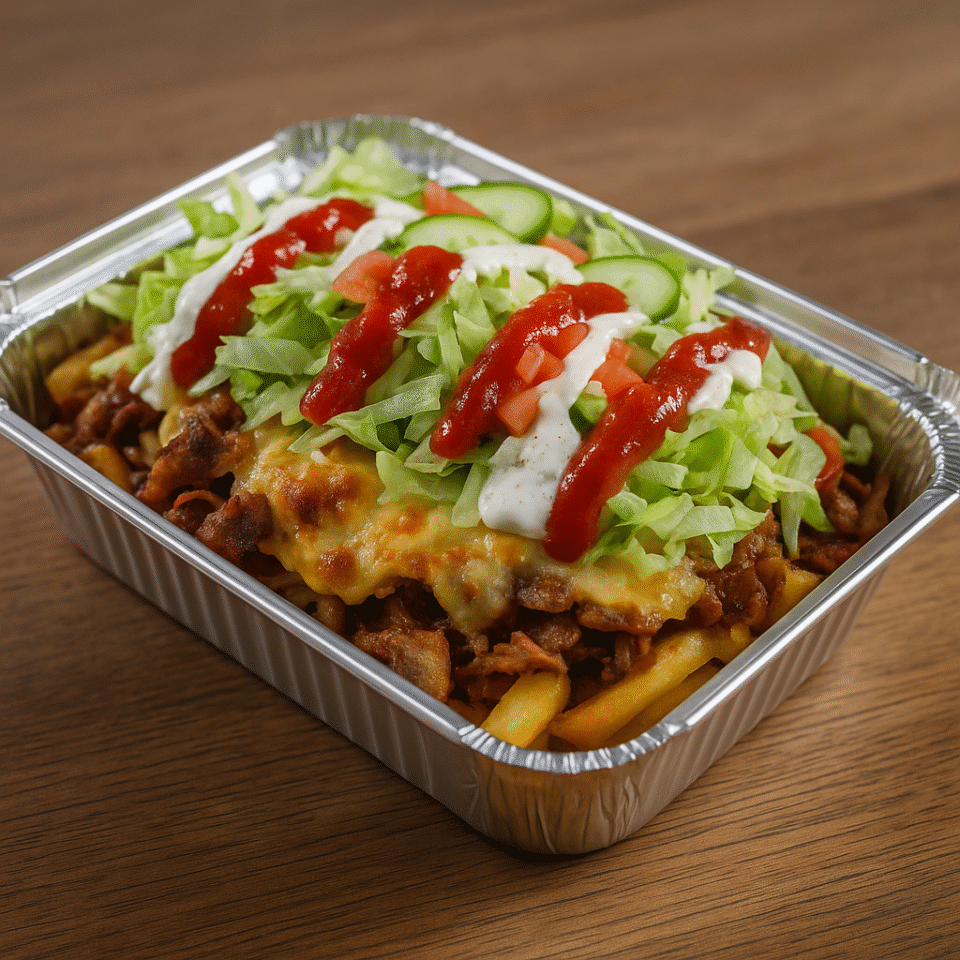
What lands in their hands looks like a dare: a foil tray loaded with fries, döner meat, and melted cheese, then topped with lettuce, tomato, cucumber, and a generous squirt of garlic sauce and sambal.
It’s a hot mess. And it’s kind of magnificent.
From Salon Chair to National Icon
Kapsalon’s origin story sounds like urban legend, but it’s surprisingly well-documented. In 2003, Nathaniël Gomes — a Cape Verdean hairdresser in Rotterdam’s Delfshaven district — was hungry. His usual go-to at the döner shop next door, El Aviva, wasn’t quite doing it anymore.
So he made a special request: fries on the bottom, döner meat and cheese on top, grilled until bubbly.
It was a hit. Gomes started ordering it regularly. Curious customers began asking for “whatever the hairdresser gets.” Eventually, the shop just put it on the menu under the name kapsalon.
From there, it spread. Within a few years, this accidental invention had taken over menus across the country. Today, kapsalon is a fixture in döner shops and snack bars nationwide. Ask a Dutch teenager where to find the best one and you’ll likely get a passionate, highly specific answer.
Anatomy of a Kapsalon
Let’s break it down. When you order a kapsalon, here’s what you’re really signing up for:
-
Fries – Thick-cut and golden, the kind that can hold up under pressure.
-
Döner meat – Usually lamb or chicken, sliced hot off a spit. Spiced, fatty, unapologetic.
-
Cheese – Gouda, mozzarella, or a blend. Melted under a grill until it bubbles and browns.
-
Salad – Iceberg lettuce, diced tomatoes, cucumber. Technically vegetables.
-
Sauces – Creamy garlic (often mayo-based) and spicy sambal oelek, applied with enthusiasm.
The result is a glorious, greasy mountain of contrasts — hot and cold, soft and crunchy, savory and spicy — all colliding in one aluminum tray.
⚠️ According to Dutch nutrition watchdog Voedingscentrum, a full kapsalon can easily top 1,800 calories, with enough salt and saturated fat to keep your blood pressure company for days.
How (and When) to Eat It
Kapsalon isn’t dinner. It’s an event. A full-contact meal. A statement.
Timing: This is late-night food. Think post-club, post-bar, post-judgment. It hits best between 10 PM and 3 AM, when nothing else makes quite as much sense.
Setting: Found mostly in döner or shawarma joints with fluorescent lights and fogged-up windows. Not the place for ambiance. This is about function, not form.
Method: It comes in a foil tray with a plastic fork. You’ll need napkins. Maybe a bench. Possibly regret.
Sharing: One kapsalon can easily feed two or three people. Or just one, depending on how your night is going. No one’s judging. At least not out loud.
Why This Exists in a Health-Conscious Nation
The Dutch are famously fit. They bike everywhere. They eat brown bread and low-fat cheese. Their cities are engineered for healthy living.
So what’s up with this?
That’s the genius of it. The Dutch don’t pretend kapsalon is anything other than what it is: an indulgent, over-the-top, occasionally regrettable choice. And that’s the charm.
Where other cultures might dress up their junk food in health claims or trend-driven buzzwords, the Dutch lean into it with refreshing honesty. No kale, no quinoa, no high-protein angle. Just fries, meat, cheese, sauce, and the unspoken agreement that, once in a while, it’s perfectly okay to eat like a cartoon character.
It’s pragmatism, Dutch-style. Live well most of the time. And when you don’t? Make it count.
Should You Try It?
If you’re an expat, the answer is yes. But on the right terms.
Where to Go: Look for döner shops with late hours and a loyal local crowd. Rotterdam, kapsalon’s birthplace, has some of the best versions. You can even find it on Thuisbezorgd (Dutch Uber Eats) if you’re brave enough to kapsalon from the comfort of your couch.
What to Expect: That first bite might catch you off guard. There’s a lot happening. Hot cheese, cold salad, crispy fries, spicy sauce. Give it a moment. Then another.
Best Timing: After drinks, late at night, with friends. Not during lunch. Not on a first date. Not before a long walk.
The Hangover Effect: It’s either a miracle cure or a catastrophic mistake. Results may vary.
Vegetarian Options: Some shops offer falafel or veggie meat versions. They exist. They’re edible. But they are not the same.
Final Thoughts: A Beautiful Disaster
Kapsalon shouldn’t exist. And yet, here we are.
It’s chaotic, indulgent, and entirely unnecessary. And that’s exactly why it works. Like many things in Dutch life, it started with practicality (a hungry hairdresser), evolved through community (repeat orders), and stuck around because… well, it just hits the spot.
You don’t have to love kapsalon. But try one, just once. Not for the flavor alone — though it might surprise you — but for what it represents. A country that’s organized, rational, and quietly wild under the surface.
Sometimes the clearest cultural insights come in an aluminum tray, smothered in garlic sauce.
About What the Dutch is That?
Why are windmills, tulips, and wooden shoes so deeply tied to the Dutch identity? What’s real, what’s myth, and what’s been quietly misunderstood?
What the Dutch is That? is a series that unpacks how certain things became synonymous with the Netherlands—and what they reveal about the people, the land, and the rhythm of life here. Not just symbols, but stories. Not just icons, but origins.